




Have questions? Contact Paulding Putnam's Right-of-Way Coordinator Ben Hicks at 419-469-1687.
Five Quick Facts About Tree Trimming:
- Prevents outages & keeps you safe
Trees and branches hitting lines can knock out power for thousands. We trim along 1,700 miles of lines every cycle—by the time we finish, growth has already started again. It’s ongoing work that protects everyone.
- Big impact on reliability
Tree-related outages dropped from 26% of our total outage minutes in 2007 to just 3% in 2014 after we began aggressive right-of-way clearing.
- What happens during trimming
In maintained/landscaped areas: crews remove branches and brush; wood is left for you. In non-maintained areas: everything is left on-site.
- We’ll contact you first
Our contractor knocks on your door to explain the plan. If you’re not home, they leave a door hanger with details and a phone number to call with questions or concerns. Please respond—we want to address any issues before work begins.
- Tree health is our priority
Our professional crews follow standards from the International Society of Arboriculture, ANSI, and the National Arborist Association to protect appearance and long-term tree health.
2026 Work Schedule

- Tillman Substation area - starting in March
- Seiler Substation area
- Route 14 Substation area
- Monroe Substation area
- Hessen Substation area
Meet our Tree-Trimming Contractor

Paulding Putnam's tree-trimming contractor is Tree Servants & GridGuards (one company, two names)
Office number: 260-440-2302.
Look for vehicles with Paulding Putnam magnets when they’re in your area.
More Aggressive Trimming Ahead
Rising costs make every dollar count. To keep rates low and power reliable, we’re trimming near lines more aggressively than before. We’ll always try to reach you first—please respond so we can answer questions and work together. If you’re not home, check the door hanger for a direct number.
Tree-Trimming Crews Watch For:
- Branches growing under or over lines
- Leaning or unstable trees that could fall
- Trees that could grow into lines
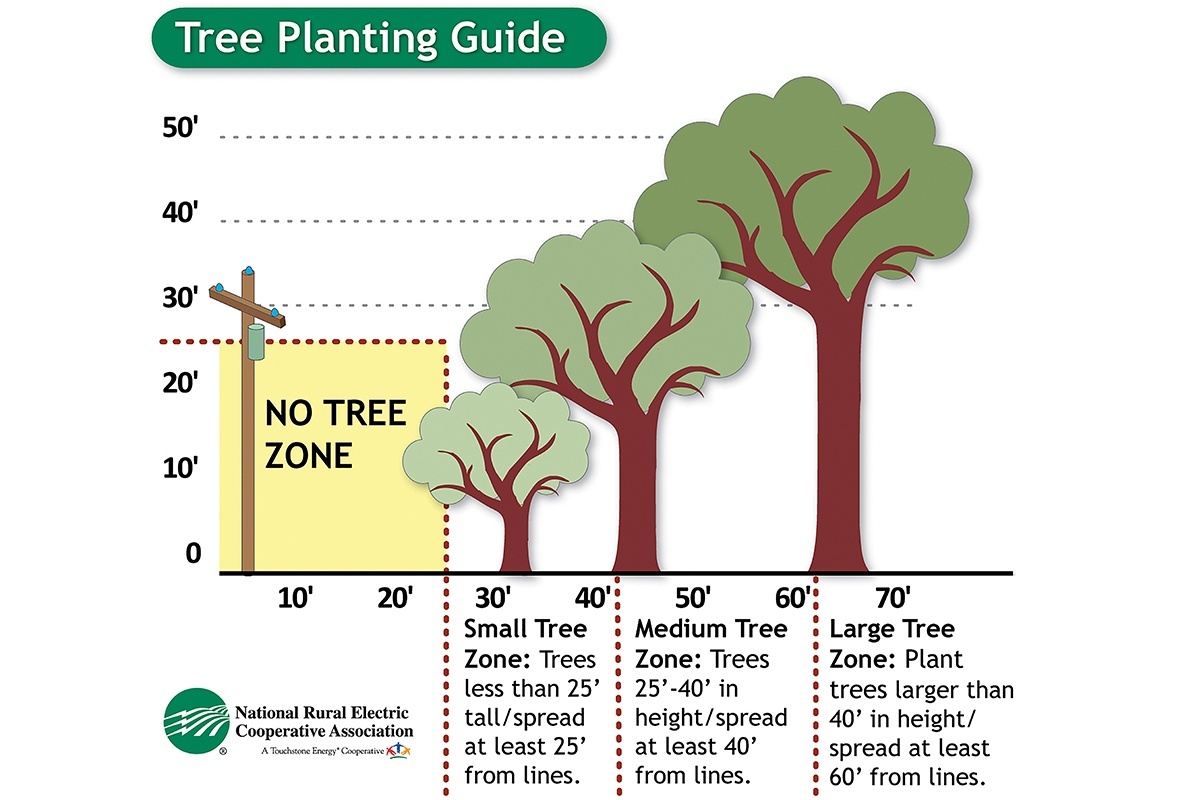
Tree Planting Guide
Keep at least 25 feet of clearance (ground to sky) on each side of poles. Plant smart—choose small trees near lines and tall ones far away.
Safe, Short Trees (mature height ≤20 ft)
- Crabapple
- Flowering Dogwood
- Hawthorn
- Bristlecone Pine
- Common Juniper
- Trident, Amur, Paperbark & Tartarian Maples
- Rose Acacia
Tall Trees – Plant at least 60 ft from lines
- Oak
- Colorado Blue Spruce
- Silver & Norway Maples
- Most pine species
Helpful Resources
Tree Planning, Selection, & Location | Arbor Day Foundation
In Defense of Utility Pruning - Tree Care Industry Magazine
Tree Trimming FAQ
Why do we trim trees?
Tree trimming prevents branches from contacting power lines, reducing outages, fire risks, and costly repairs. It helps keep electric rates steady by avoiding emergency call-outs and equipment damage.
How often does trimming happen?
We maintain nearly 1,700 miles of power lines on a four-year cycle to ensure long-term reliability and minimize outages.
How much of my tree gets trimmed?
We follow professional standards from the International Society of Arboriculture, ANSI, and the National Arborist Association to protect tree health. If a tree can’t be safely trimmed, it may need removal. Tall-growing brush is managed by mowing, hand-cutting, or EPA-approved herbicides.
My tree looks far from the lines—why trim it?
Trained professionals assess future growth, wind movement, and potential hazards. The goal is to keep your tree clear of lines for at least five years.
Why remove brush under the lines?
Small trees grow into big ones. Removing tall-growing brush reduces fire risk, improves access for crews, and lowers long-term maintenance costs.
Will you remove a dead tree on my property?
We assess dead trees near lines case-by-case. If it poses an outage risk, we may reduce its height to prevent contact with lines. Any additional work is the owner’s responsibility.
Can I trim trees near lines myself?
No—never attempt to trim or remove trees/limbs near power lines. Only certified line professionals should do this work.
Do you use herbicides?
Yes, we apply EPA-registered herbicide directly to stumps to prevent regrowth, reducing repeated cutting and keeping rights-of-way clear longer. Licensed professionals handle application.
What happens to the debris?
In maintained areas: branches are chipped and hauled away; large trunks are cut and left for your use. In unmaintained areas (e.g., woodlots): debris is left to decompose. During storm restoration, cleanup is the owner’s responsibility.
Can I get a load of wood chips/mulch?
We generate mulch from trimming. If we’re working near you, contact us or our contractor—we’ll do our best to provide a load when available.
Questions?
Call our Right-of-Way Coordinator, Ben Hicks, at 419-469-1687.
Thank you for helping us keep the power on—together!